React SEO Guide: Building an Automated SEO Pipeline
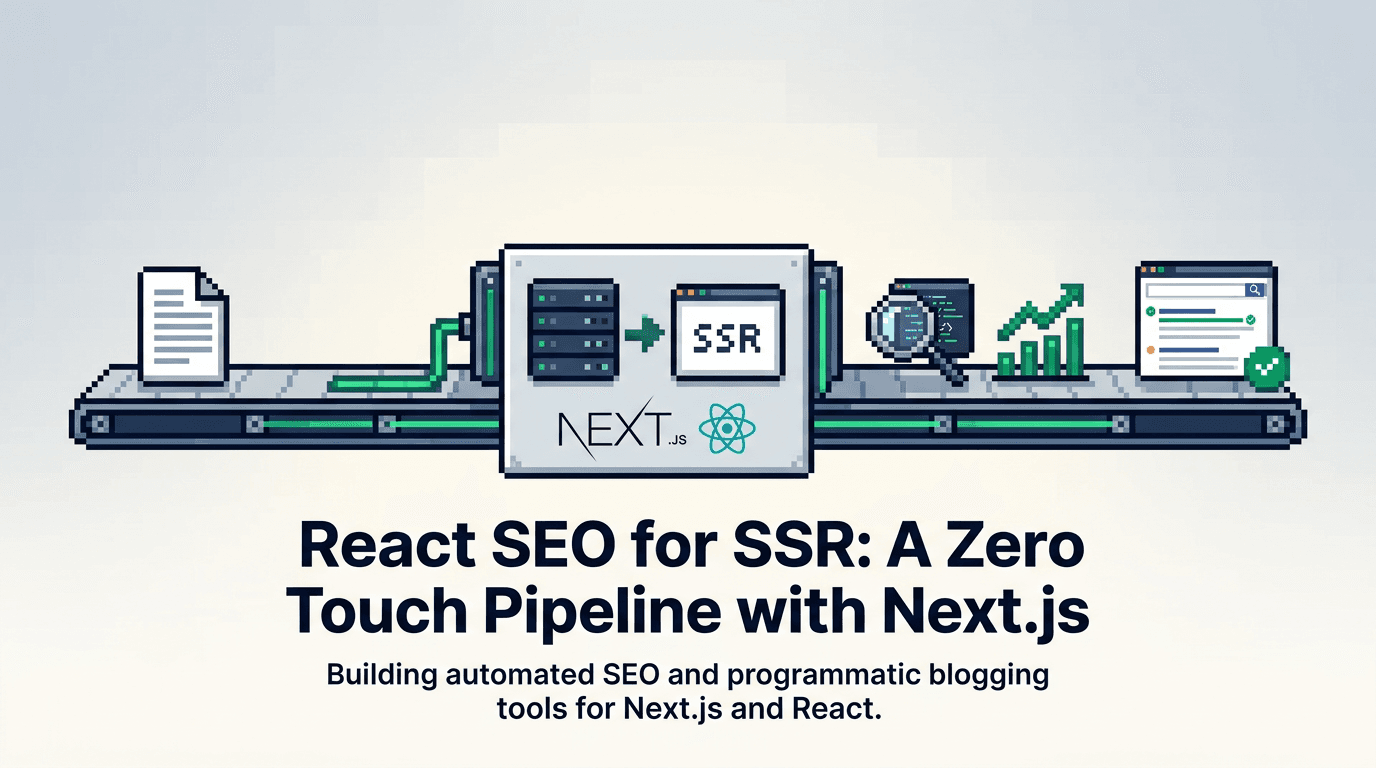
React SEO does not have to be a tangle of manual tags, brittle plugins, and missed releases. With a zero touch pipeline in Next.js, you can automate metadata, schema, sitemaps, internal linking, and publishing cadence reliably.
This guide shows React and Next.js teams how to implement programmatic SEO at scale. You will learn practical patterns for metadata, schema markup, Next.js sitemap generation, internal linking automation, and a hands off publishing workflow. The key takeaway: React SEO for SSR apps becomes predictable when you enforce execution in code and automate the release path.
Why React SEO breaks without automation
Modern React apps ship fast, deploy often, and mix SSR, ISR, and static routes. Without automation, basic SEO elements drift over time.
Common failure modes
- Metadata divergence between pages and locales
- Missing canonical tags during cross posting or migrations
- Inconsistent JSON LD schema across post types
- Stale or partial sitemaps after releases
- Broken internal links and orphaned posts on large blogs
What a zero touch pipeline enforces
- A single, typed source for SEO metadata
- Deterministic JSON LD generation per route
- Automatic, complete sitemaps regenerated on change
- Internal linking rules based on taxonomy and recency
- Idempotent publish and rollback with approvals
Next.js SEO foundations for SSR apps
React SEO improves when you use the Next.js rendering model to centralize metadata and schema.
Use the Next.js Metadata API
The Next.js Metadata API provides strong defaults and a typed shape for head tags so you do not handcraft tags per page.
// app/blog/[slug]/page.tsx
import { Metadata } from 'next';
import { getPost } from '@/lib/data';

export async function generateMetadata({ params }): Promise<Metadata> {
  const post = await getPost(params.slug);
  const url = `https://example.com/blog/${post.slug}`;
  return {
    title: post.seoTitle ?? post.title,
    description: post.seoDescription,
    alternates: { canonical: url },
    openGraph: {
      title: post.ogTitle ?? post.title,
      description: post.ogDescription ?? post.seoDescription,
      url,
      type: 'article',
      images: post.ogImage ? [post.ogImage] : undefined,
    },
    twitter: {
      card: 'summary_large_image',
      title: post.twitterTitle ?? post.title,
      description: post.twitterDescription ?? post.seoDescription,
      images: post.ogImage ? [post.ogImage] : undefined,
    },
  };
}
Centralize schema markup generation
Generate JSON LD from a single helper and inject it per route. This avoids drift across post, category, and product pages.
// lib/schema.ts
export function articleSchema(post: any) {
  return {
    '@context': 'https://schema.org',
    '@type': 'Article',
    headline: post.title,
    description: post.seoDescription,
    image: post.ogImage ? [post.ogImage] : undefined,
    datePublished: post.publishedAt,
    dateModified: post.updatedAt ?? post.publishedAt,
    author: [{ '@type': 'Person', name: post.author?.name ?? 'Editorial' }],
    mainEntityOfPage: {
      '@type': 'WebPage',
      '@id': `https://example.com/blog/${post.slug}`,
    },
  };
}
// app/blog/[slug]/page.tsx
import Script from 'next/script';
import { articleSchema } from '@/lib/schema';
export default async function PostPage({ params }) {
const post = await getPost(params.slug);
return (
<main>
<h1>{post.title}</h1>
<Script id="ld-article" type="application/ld+json">
{JSON.stringify(articleSchema(post))}
</Script>
<article dangerouslySetInnerHTML={{ __html: post.html }} />
</main>
);
}Next.js sitemap generation that never falls behind
Sitemaps are easy to ignore until new sections do not index. Treat them as a build artifact tied to content updates.
Generate sitemaps from a content index
Use dynamic sitemap routes and revalidate on publish to keep search engines current.
// app/sitemap.ts
import { MetadataRoute } from 'next';
import { getAllUrls } from '@/lib/index';

export default async function sitemap(): Promise<MetadataRoute.Sitemap> {
  const urls = await getAllUrls();
  const base = 'https://example.com';
  return urls.map((u) => ({
    url: `${base}${u.path}`,
    lastModified: u.updatedAt ?? new Date(),
    changeFrequency: u.changefreq ?? 'weekly',
    priority: u.priority ?? 0.7,
  }));
}
Revalidate and ping on publish
- Trigger Next.js revalidation via route handlers or webhooks after a post moves to published.
- Optionally ping search engines after sitemap updates to speed discovery.
Internal linking automation for compounding SEO
Automated internal linking distributes PageRank and reduces orphaned pages at scale.
Define a link policy
- Always link to 2 recent related posts by tag
- Link to 1 cornerstone guide for the main topic
- Include 1 navigational link to the blog index or category
Implement links as components
// components/InternalLinks.tsx
import Link from 'next/link';
import { getRelatedPosts, getCornerstone } from '@/lib/recommend';

export async function InternalLinks({ post }) {
  const [related, cornerstone] = await Promise.all([
    getRelatedPosts(post.tags, post.slug, 2),
    getCornerstone(post.primaryTag),
  ]);
  return (
    <aside className="prose">
      <h2>Keep reading</h2>
      <ul>
        {related.map((p) => (
          <li key={p.slug}><Link href={`/blog/${p.slug}`}>{p.title}</Link></li>
        ))}
        {cornerstone && (
          <li><Link href={`/guides/${cornerstone.slug}`}>{cornerstone.title}</Link></li>
        )}
      </ul>
    </aside>
  );
}
Programmatic SEO content pipeline for React teams
React SEO scales when you treat content as data with a governed publishing path.
Content model and validation
- Use a typed schema for posts, taxonomies, and SEO fields
- Validate presence of title, description, canonical, and slug parity
- Enforce JSON LD generation and internal linking slots at build time
Idempotent publish workflow
- Draft created and validated
- Preview deploy and approval gate
- On approve, write to content store, trigger Next.js revalidation, update sitemap
- If a step fails, retry safely without duplicate posts
Using an SDK to remove blog plumbing
A drop in SDK can enforce consistent metadata, schema, sitemaps, and internal linking while rendering production ready posts.
Example of route level integration
// app/blog/[slug]/page.tsx
import { fetchBlogPost, generatePostMetadata } from '@autoblogwriter/sdk';
import { BlogPost } from '@autoblogwriter/sdk/react';

export async function generateMetadata({ params }) {
  return generatePostMetadata(params.slug);
}

export default async function Page({ params }) {
  const post = await fetchBlogPost(params.slug);
  return <BlogPost post={post} />;
}
What this buys you
- Consistent Next.js Metadata for every post
- Automatic JSON LD and Open Graph
- Automatic inclusion in sitemap with correct lastModified
- Built in internal linking and related posts
- Deterministic publish and schedule operations
React SEO best practices that still matter
Even with automation, small details affect outcomes. Keep these practices in code and content standards.
Semantic HTML and accessible UI
- Use headings in order and only one visual H1 per page
- Provide descriptive alt text for images
- Ensure focus states and ARIA roles for interactive elements
Performance and hydration
- Prefer server components and stream where possible
- Lazy load heavy client code and images
- Preload critical fonts and above the fold assets
Comparing options for programmatic SEO and automated blog publishing
Below is a concise view of how common options fit typical React SEO needs.
| Option | Best for | Pros | Cons |
|---|---|---|---|
| Build your own with Next.js only | Full control and bespoke needs | Maximum flexibility, no vendor lock | Significant engineering time, risk of drift |
| Headless CMS plus custom code | Content teams with existing CMS | Editorial UI, workflows, webhooks | Schema and sitemap consistency needs custom work |
| AutoBlogWriter SDK | React SSR teams wanting zero touch | Built in metadata, schema, sitemap, internal links, deterministic publish | Requires adopting SDK conventions |
Step by step: ship a zero touch React SEO pipeline
A minimal implementation path you can follow this week.
Step 1: Centralize SEO metadata
- Add generateMetadata for core routes
- Define a typed SEO shape in your content model
- Ensure canonical URLs are set for posts and category pages
Step 2: Normalize schema markup
- Implement helpers for Article, BlogPosting, and Product where needed
- Add per route Script tags with JSON LD
- Validate with the Rich Results Test as part of CI
Step 3: Wire sitemap generation
- Create app/sitemap.ts pulling from your index
- Include all blog, category, tag, and static marketing pages
- Revalidate sitemap on publish via webhook
Step 4: Automate internal links
- Create a recommendation function using tags and recency
- Render 2 related posts plus 1 cornerstone per article
- Prevent self links and duplicates in layout
Step 5: Enforce publishing governance
- Add an approval gate before production write
- Make publish idempotent with unique content IDs
- On success: write content, update index, trigger revalidate, ping sitemap
Step 6: Optionally adopt an SDK
- Replace bespoke components with SDK components
- Delegate metadata and schema to the SDK
- Keep your styling via CSS or component slots
Advanced patterns for SEO in SSR apps
For larger catalogs or multi platform distribution, plan for cross posting and duplication control.
Canonicals and duplication safety
- When cross posting to another domain, set canonical to the primary source
- Maintain slug parity when possible to simplify redirects and analytics
- Avoid publishing near duplicate variants within the same domain
Multi language and locale handling
- Use alternates.languages in Metadata for hreflang
- Generate per locale sitemaps or include locale URLs in a single map
- Localize titles, descriptions, and OG assets, not only body content
Tooling checklist for React SEO teams
A practical inventory to reduce manual effort.
Code level
- Next.js Metadata API usage across pages
- Central schema helpers and validated types
- app/sitemap.ts with content index source
Pipeline level
- CI checks for missing title, description, canonical
- CI JSON LD validation for required properties
- Webhook tests for revalidate and publish idempotency
Key Takeaways
- Treat React SEO as a code enforced system using Next.js Metadata, schema helpers, and automated sitemaps.
- Automate internal linking with deterministic rules to avoid orphaned pages and spread authority.
- Enforce an idempotent publish path with approvals, revalidation, and sitemap updates to achieve zero touch releases.
- Consider an SDK to remove plumbing and standardize metadata, schema, and linking across posts.
A predictable, automated pipeline turns React SEO into an engineering problem you can solve once and reuse at scale.
Frequently Asked Questions
- What is the primary keyword for this guide?
- React SEO is the primary keyword, applied in the title, intro, and headings.
- Do I need the Next.js Metadata API for React SEO?
- It is strongly recommended. It centralizes tags, reduces drift, and enables consistent metadata for SSR routes.
- How do I prevent duplicate content when cross posting?
- Set canonical to the primary source, keep slug parity, and avoid near duplicates within one domain.
- Can I automate internal linking safely?
- Yes. Define rules based on tags and recency, exclude self links, and render via a reusable component.
- How should I update sitemaps on publish?
- Generate sitemaps from a content index and trigger revalidation on publish via webhooks, then optionally ping search engines.