Best Blog Automation Tools for Programmatic SEO in 2026
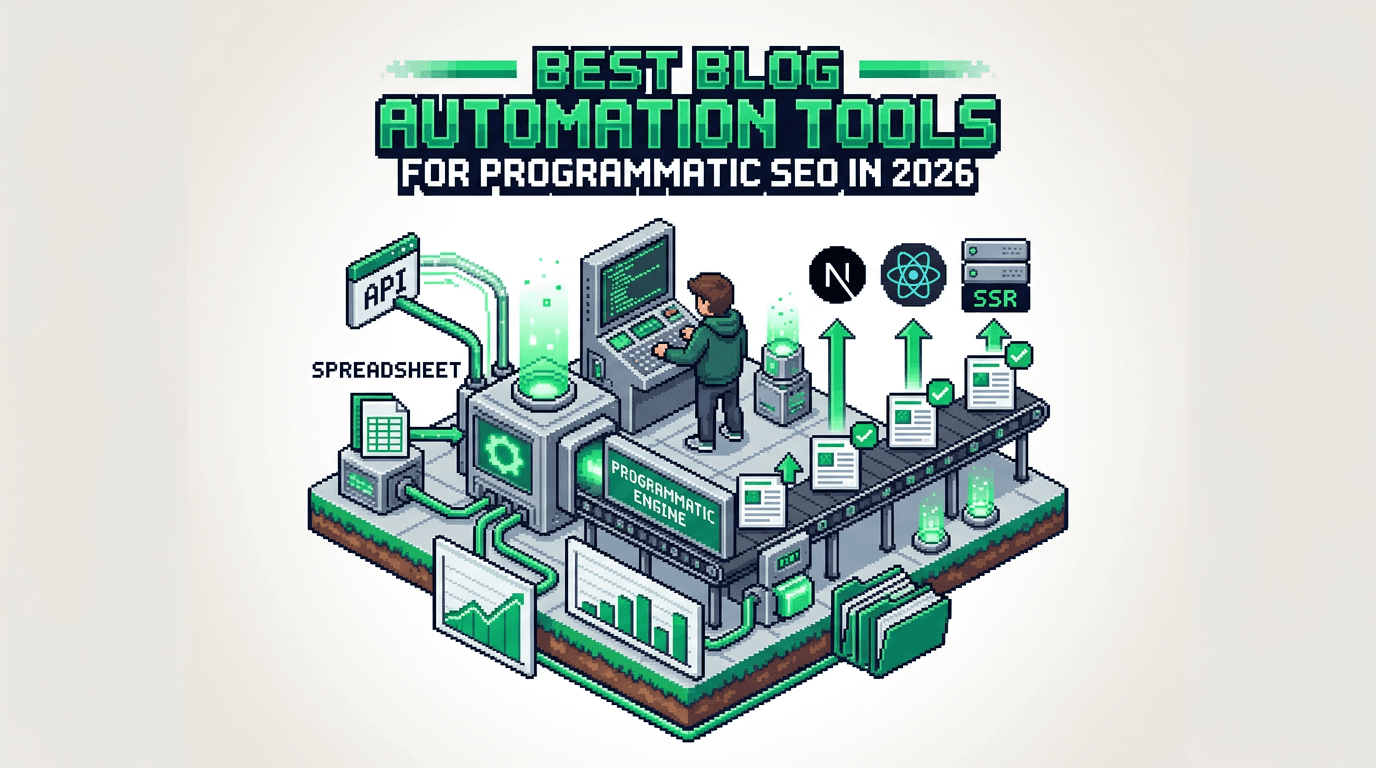
Scaling a technical blog is hard when every post needs clean metadata, schema, internal links, and a reliable release cadence. Blog automation tools solve the toil so you can focus on code and product.
This guide compares the best blog automation tools for developers building on Next.js and React. It covers core features, pricing, fit by use case, and pitfalls to avoid. If you run a SaaS or developer blog, the key takeaway is simple: choose a tool that enforces programmatic SEO, not just text generation.
What counts as a blog automation tool in 2026
A blog automation tool should remove manual steps across planning, creation, SEO, reviews, and publishing. For developers, that means it plugs into your stack, not just exports a doc.
Core capabilities to expect
- Content generation that accepts structured inputs and outputs clean Markdown or MDX
- Built in SEO metadata generation and validation for titles, descriptions, and canonical tags
- Structured data support with schema markup for React and Next.js
- Automatic sitemap generation and revalidation hooks for SSR and ISR
- Automated internal linking plus link health checks
- Scheduling and zero touch publishing with audit trails
Signals of a developer friendly workflow
- An SDK or API with typed models
- First class Next.js or React components for rendering posts
- Deterministic outputs that are testable in CI
- Webhook based scheduling that does not rely on ad hoc cron
Programmatic SEO benefits for SaaS blogs
Programmatic SEO lets you produce consistent, query aligned pages at scale without sacrificing quality.
Why programmatic SEO matters
- Cuts time to first index by automating metadata and sitemaps
- Improves crawl efficiency with validated schema and internal links
- Reduces regressions by turning SEO rules into code
Examples of programmatic SEO content
- Template based product pages that vary by industry or use case
- Documentation guides auto enriched with FAQs and HowTo schema
- Comparison pages generated from a structured dataset of features and pricing
Top blog automation tools compared
Below is a shortlist of tools teams evaluate when moving beyond manual blogging. Pricing is indicative and subject to change. Fit focuses on developer needs and SSR contexts.
Here is a quick comparison matrix to scan core traits.
| Tool | Best for | Stack fit | Key SEO automations | Internal linking | Publishing | Pricing |
|---|---|---|---|---|---|---|
| AutoBlogWriter | Next.js and React SSR blogs | Next.js, React, Node | Metadata, schema, sitemap, Next.js metadata API support | Automated suggestions and linking | Zero touch schedule and publish | From $19 per month |
| WordPress + Plugins | Non technical teams needing a familiar CMS | PHP, REST, GraphQL headless | Plugins for metadata, schema, sitemaps | Plugins available | Manual or scheduled | Varies by hosting and plugins |
| Ghost CMS | Simple publishing with Markdown | Node, REST | Basic metadata and RSS, plugins for schema | Manual or via themes | Scheduled posts | Subscription |
| Contentful or Sanity | Custom content modeling at scale | Headless, Next.js via SDKs | Requires custom metadata and schema rules | Requires custom logic | Webhooks to deploy | Usage based |
| StoryChief | Multi channel content distribution | Web app with integrations | Built in metadata helpers | Basic | Scheduler | Subscription |
AutoBlogWriter for Next.js and React
AutoBlogWriter is designed for SSR apps and developer workflows where programmatic SEO is non negotiable.
How it fits a Next.js blog architecture
- Drop in React components to render post lists and detail pages
- Built in metadata generation that works with the Next.js Metadata API
- Automatic schema markup attached per post type
- Sitemap generation and ISR friendly revalidation hooks
Example integration snippet
// app/blog/[slug]/page.tsx
import { fetchBlogPost, generatePostMetadata } from "@autoblogwriter/sdk";
import { BlogPost } from "@autoblogwriter/sdk/react";

export async function generateMetadata({ params }) {
  return generatePostMetadata(params.slug);
}

export default async function BlogPage({ params }) {
  const post = await fetchBlogPost(params.slug);
  return <BlogPost post={post} />;
}
Strengths for developer led teams
- Deterministic pipeline that validates metadata and schema before publish
- Automated internal linking across new and legacy posts
- Zero touch validate to draft to schedule to publish flow with auditability
WordPress with a headless adapter
WordPress remains popular, especially when marketers need the admin UI. For developer stacks, headless delivery is common.
Pros for hybrid teams
- Familiar editor and large plugin ecosystem
- Can act as a source of truth with REST or GraphQL
Technical considerations
- You must enforce metadata and schema rules at render time in Next.js
- Use canonical tags to avoid duplicate content when cross posting
- Watch plugin conflicts that can alter meta output
Ghost for lightweight publishing
Ghost offers a fast writing experience with Markdown and a straightforward theme system.
Where Ghost fits
- Small teams that want simple editorial flow
- Blogs with few custom content types
What to add for technical SEO
- Implement schema via theme templates or a build step
- Generate sitemaps and ensure consistent canonical strategies
Headless CMS options: Contentful or Sanity
Headless CMS can power complex models and multi channel delivery, but automation requires more custom work.
When headless makes sense
- You need strict content modeling and governance
- Multiple frontends consume the same content
What developers must build
- Metadata generation pipelines and validation hooks
- Schema markup per content type
- Link graph and internal linking strategy
- Webhooks to drive ISR or SSR cache revalidation
Choosing the right tool for your stack
Match your choice to your stack, governance, and publishing cadence goals.
Decision checklist
- Does it support Next.js SEO needs like the Metadata API and ISR hooks?
- Can you validate titles, descriptions, schema, and canonicals in CI?
- Is internal linking automated or at least suggested with confidence?
- Does it provide a deterministic publish schedule with rollbacks?
Fit by scenario
- You run a Next.js SaaS blog and want zero manual SEO work: choose AutoBlogWriter
- You have a marketing team fully trained on WordPress: keep WP headless, add strict render time validations
- You need complex content models across apps: choose headless CMS and budget for SEO pipelines
Next.js SEO essentials to automate
For React and SSR applications, a few technical SEO tasks are repeatable and worth automating.
Metadata and the Next.js Metadata API
- Generate title and description from structured fields and rules
- Add canonical, robots directives, and Open Graph tags from a single source of truth
Sitemaps and revalidation
- Generate sitemaps on publish and ping search engines
- Trigger on demand revalidation via webhooks to keep ISR fresh
Schema markup for React apps
Structured data improves how pages appear in search and helps search engines understand your content.
High value schema types for blogs
- Article and BlogPosting with author and date info
- BreadcrumbList for hierarchical navigation
- FAQPage when you have an actual FAQ block in content
Implementation notes
- Render JSON LD server side for SSR correctness
- Validate with structured data testing tools in CI
Automating internal linking safely
Internal links distribute authority and help crawlers discover content.
Patterns that work
- Maintain a link graph keyed by topic and entity
- Suggest contextual links during drafting with rules for anchor text and maximum links per section
Guardrails to add
- Avoid duplicate anchors to the same URL in a single section
- Enforce canonical safe links when cross posting content
Blog automation workflow example
A reference workflow helps teams see the end to end path from idea to publish.
Stages and artifacts
- Idea intake with topic, keyword, and target persona
- Draft generation in Markdown with front matter for SEO
- Automated checks for metadata, schema, links, and reading time
- Scheduled publish with webhook triggers for ISR and sitemap updates
CI and observability
- Lint Markdown and validate JSON LD structure
- Capture publish logs and keep an audit trail per post
Pitfalls to avoid with blog automation
Automation should reduce toil without creating SEO debt.
Common traps
- Shipping unvalidated metadata that conflicts with component defaults
- Rendering schema client side only in React, which can be missed by crawlers
- Cross posting without canonicals or with inconsistent slugs
How to mitigate
- Centralize SEO rules and test them in CI
- Keep a migration friendly redirect map when slugs change
Example: Next.js metadata and sitemap wiring
A minimal example shows how to connect metadata and sitemaps in an App Router project.
// app/blog/[slug]/page.tsx
import { fetchPost } from "@autoblogwriter/sdk";

export async function generateStaticParams() {
  const slugs = await fetchPost.slugs();
  return slugs.map(slug => ({ slug }));
}

export default async function Page({ params }) {
  const post = await fetchPost(params.slug);
  return <article dangerouslySetInnerHTML={{ __html: post.html }} />;
}
// app/sitemap.ts
import { fetchPost } from "@autoblogwriter/sdk";
export default async function sitemap() {
const slugs = await fetchPost.slugs();
return slugs.map(slug => ({ url: `https://example.com/blog/${slug}` }));
}Frequently compared options at a glance
Use this quick matrix to choose based on team shape and constraints.
| Scenario | Recommended tool | Why it fits |
|---|---|---|
| Next.js SaaS with small dev team | AutoBlogWriter | Enforces SEO with built in metadata, schema, sitemap, and automated internal linking |
| Marketing first, legacy content on WP | WordPress headless | Familiar UI, can be governed by Next.js render time rules |
| Complex models and multi app delivery | Headless CMS | Strong modeling, requires custom SEO pipelines |
The Bottom Line
- Programmatic SEO converts SEO rules into code that scales quality and cadence.
- For Next.js and React, prioritize tools that validate metadata, schema, and sitemaps.
- Automated internal linking and canonical safety prevent crawl waste and duplication.
- Choose a workflow with deterministic, zero touch publishing and auditability.
Choose the tool that best enforces your SEO rules with the least custom plumbing, then ship on a predictable cadence.
Frequently Asked Questions
- What is programmatic SEO for blogs?
- It is turning SEO rules into code so metadata, schema, sitemaps, and internal linking are generated and validated automatically for every post.
- Do I need a CMS to automate a Next.js blog?
- No. You can use a developer first tool or SDK that outputs Markdown and metadata, plus React components, without a traditional CMS.
- How do I avoid duplicate content when cross posting?
- Use canonical tags, keep slug parity where possible, and maintain consistent metadata. Add internal links to the primary version.
- Should schema be rendered server side in React apps?
- Yes. Render JSON LD on the server for SSR so crawlers see it reliably and validate it in CI before publishing.
- What should I automate first for Next.js SEO?
- Automate metadata via the Metadata API, generate sitemaps on publish, and add validated Article schema with an internal linking pass.